What’s the real choice here?
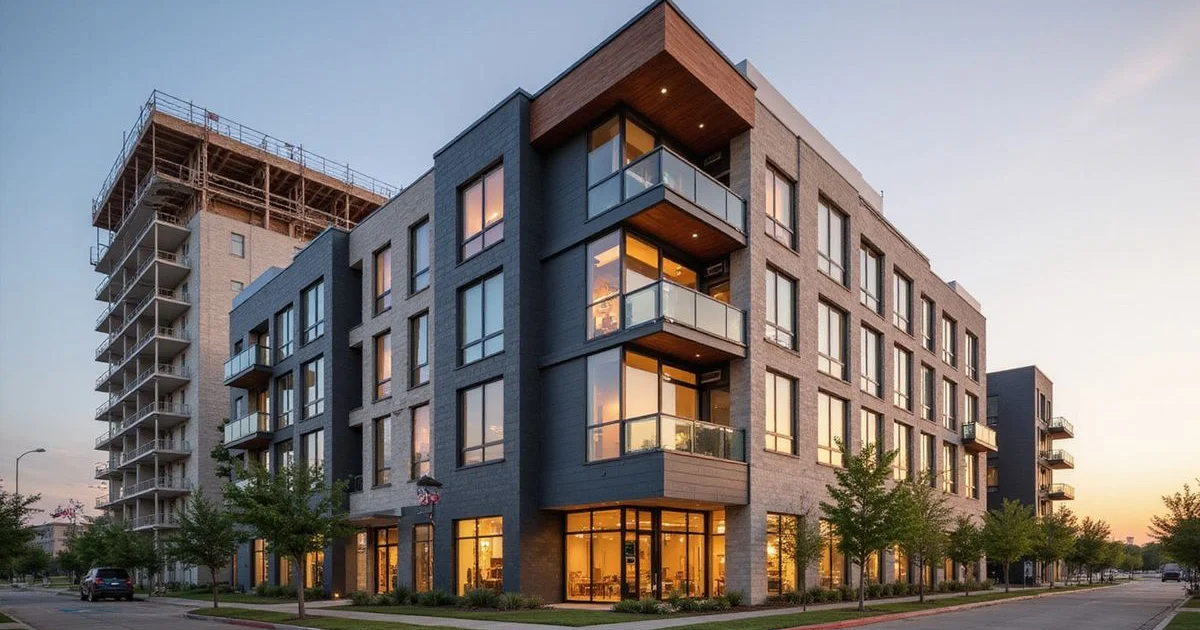
If your lease ends in a few months, you may have two good paths. You can pre-lease a building that hasn’t opened yet, from our list of new apartments opening soon, or you can move into a building that’s open now. Both are new construction. The difference is timing, certainty, and what you can see before you sign.
What does each path offer?
| Pre-lease an unopened building | Move into an open building | |
|---|---|---|
| Choice of units | Often first pick | What’s left in the release |
| Specials | Pre-leasing specials, sometimes deep | Lease-up specials, often deep |
| Seeing the unit | Model or hard-hat tour | The actual unit |
| Move-in date | Can slip | Known |
| Amenities | Likely unfinished at first | May be partly finished |
| Risk | Date slip, overlap with your lease | A special changing before you apply |

How do you decide?
We’d ask four questions, in this order:
- When does your current lease end, and how much notice do you owe? If the opening date is close to your lease end, pre-leasing carries more risk.
- Can you go month-to-month or extend if the date slips? If yes, a slip costs less, and pre-leasing gets easier.
- Is there a specific unit or floor plan you want? If yes, pre-leasing may be the way to get it.
- How do the specials compare over 24 months? A pre-lease special and a lease-up special can look different and cost about the same.
If your dates are tight and your current landlord won’t go month-to-month, moving into an open building is usually the steadier choice. If you have buffer and want first pick, pre-leasing can work well. If the building opens in stages, our guide on renting in a building that opens in phases covers what to ask.
Buffer is the deciding factor
The more room you have between your lease end and the expected opening, the less a date slip costs you.
How do the specials compare?
Pre-leasing specials help a building start strong. Lease-up specials help it keep filling. Either can be deeper at a given moment. Both lower year one only, and renewals price from base rent. We compare them on net effective, true monthly, and year two, from the morning pull. Our lease-up apartments page shows what’s open now.
What should you get in writing for a pre-lease?
- The expected delivery date, and how you’ll be told if it moves
- The delay clause: later start, transfer, or release
- The pre-lease special, with its conditions
- Any holding deposit, and when it’s refunded
- The amenity opening dates
A labeled timing example
Here’s how buffer changes the decision, with made-up dates.
| Your lease ends | Pre-lease opening date | Buffer | What we’d suggest |
|---|---|---|---|
| March 31 | January 15 | About 10 weeks | Pre-leasing fits well |
| March 31 | March 1 | About 4 weeks | Fits if month-to-month is available |
| March 31 | March 25 | Under a week | Move into an open building instead |
Ten weeks of buffer absorbs most slips. A few days doesn’t. If your current landlord won’t go month-to-month, give extra weight to buildings that are open now.
The special side of the decision is simpler. Compare the pre-lease special and the lease-up special on net effective, true monthly, and year two. If they’re within a few dollars a month, pick the path with less date risk.
What happens next?
Our pre-lease or move now flow walks through the questions with your dates. Or tell us your lease end and areas. We’ll send a same-day list with both kinds of options, priced the same way.